
Hereditary Cataracts in Dogs: A Breeder's Complete Guide
Cataracts are among the most commonly detected findings on OFA eye certification exams. They are also among the most misunderstood. Many breeders panic when their dog comes back with a cataract notation, assuming the worst. Others dismiss cataract findings entirely because the dog sees fine. Neither response is appropriate. Understanding hereditary cataracts specifically — what they are, how they differ from other cataracts, and what they mean for your breeding program — is essential for making sound decisions.
I have had cataract findings in my Collie breeding program three times over twenty-eight years. In two cases, the cataracts were incipient and nonprogressive, and the dogs remained in the breeding program with appropriate documentation and monitoring. In one case, the cataracts were posterior subcapsular and bilateral, and that dog was removed from the breeding program. Understanding the difference between those situations required both a good ophthalmologist and my own education about cataract classification.
What a Cataract Actually Is
A cataract is any opacity in the lens of the eye. The lens is normally completely clear and transparent. When cells within the lens become abnormal or the lens fibers begin to degenerate, opaque areas develop. Depending on their location, size, and density, cataracts may have minimal effect on vision or may cause significant visual impairment up to and including complete blindness.
Cataracts are classified by several factors: their location within the lens (nuclear, cortical, subcapsular, equatorial), whether they appear in one eye (unilateral) or both eyes (bilateral), the degree of opacity (incipient, immature, mature, hypermature), and their cause (hereditary, metabolic, traumatic, age-related, secondary to other eye disease).
For breeding purposes, the most critical classification is hereditary versus non-hereditary. Only hereditary cataracts have implications for a breeding program. The challenge is that distinguishing hereditary from non-hereditary cataracts requires expert evaluation, and sometimes even an ACVO diplomate cannot be certain. This is where understanding what certification codes mean becomes important, since the examiner's notation reflects their clinical assessment of the likelihood of hereditary significance.
How Hereditary Cataracts Are Identified
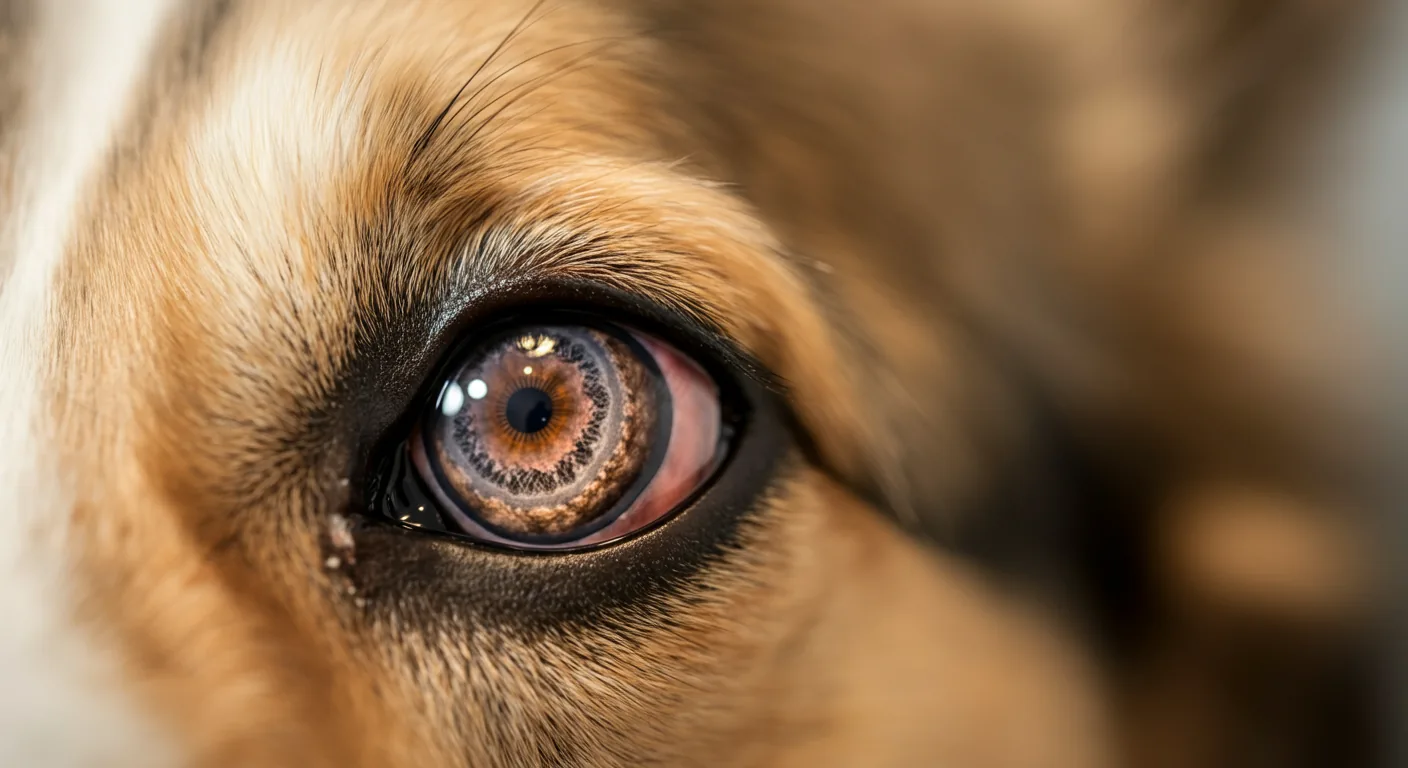
Hereditary cataracts are identified by a combination of factors: age of onset, location within the lens, bilateral versus unilateral presentation, and breed predisposition. Classic hereditary cataracts in many breeds appear in the posterior cortex in young dogs and progress over time. The pattern is characteristic enough that an experienced ophthalmologist can usually distinguish hereditary from non-hereditary cataracts in straightforward cases.
However, not all cases are straightforward. Some hereditary cataracts appear in atypical locations. Some non-hereditary cataracts mimic hereditary patterns. This is why OFA eye certification uses ACVO diplomates rather than general practitioners — distinguishing these presentations requires deep expertise in comparative ocular pathology.
For breeds with identified DNA mutations associated with hereditary cataracts, such as Staffordshire Bull Terriers, dogs can be DNA tested and identified as Clear, Carrier, or Affected. DNA testing does not replace clinical examination but adds valuable information. A dog who tests Clear on the known mutation may still develop cataracts from a different cause. A dog who tests Carrier may never develop clinical cataracts but can pass the mutation to offspring who do. The DNA vs clinical exam guide covers this complementary relationship in detail.
Breed Prevalence and Risk
Some breeds have notably elevated rates of hereditary cataracts. Boston Terriers, Staffordshire Bull Terriers, and French Bulldogs have hereditary cataract rates high enough that breed clubs have made testing central to their health programs. Australian Shepherds, Miniature and Standard Schnauzers, Siberian Huskies, Miniature Poodles, and American Cocker Spaniels also have documented hereditary cataract problems.
In Boston Terriers, hereditary cataracts caused by a mutation in the HSF4 gene were studied extensively and a DNA test developed. This allowed breeders to identify carriers and begin systematic breeding programs to reduce the frequency of the mutation in the population. The success of this effort illustrates the potential of combining clinical certification with DNA testing for conditions where the genetic basis is understood.
For breeds where hereditary cataracts are common, review the specific certification requirements your breed club has established. Some clubs have mandatory testing requirements. Others have voluntary programs with incentive structures for transparent reporting.
The Certification Notation System for Cataracts
OFA eye certification uses specific notation to describe cataract findings. The examiner documents the location, size, and character of any cataract present and provides an overall assessment. Common notations include:
- Pass: No cataracts detected, or only age-related changes not considered hereditary for the dog's age
- Breeder Option: Cataracts present but considered minor, possibly non-hereditary, or otherwise of uncertain breeding significance for the specific breed
- Affected: Cataracts present that are considered consistent with hereditary disease for the breed
A Breeder Option cataract finding is not a pass, but it is also not an automatic disqualification. The examiner is indicating that the finding was present but leaving the breeding decision to the breeder's judgment, ideally informed by discussion with the ophthalmologist and the breed club's health committee. These decisions should never be made unilaterally based solely on wanting to use a particular dog.
Progression Monitoring in Affected Dogs
If a breeding dog develops cataracts, annual recertification tracks the progression of the condition. Incipient cataracts that remain small and stable over several years may be treated differently in breeding decisions than cataracts that progress rapidly from incipient to immature to mature. Progression rate is clinically significant and worth documenting.
Some breeders photograph their dogs' eyes at each annual exam to maintain a visual record of lens changes over time. While this is not part of the formal OFA certification process, it provides useful supplementary documentation. Discuss with your ophthalmologist whether this is practical and useful for your specific situation.
Making Breeding Decisions with Cataract Findings
When a dog receives a cataract notation on an OFA exam, the appropriate response is to gather information rather than immediately acting. Talk to your ophthalmologist about what the specific finding means for your breed. Consult your breed club's health committee if one exists. Review the OFA records for the dog's relatives to see if there are patterns.
For dogs with Breeder Option cataract findings, some breeders choose to breed them to partners with consistently clear multi-generational records, monitoring the offspring carefully. Others choose not to breed them at all. Neither choice is universally right or wrong; the decision depends on the dog's overall genetic value, the specific finding, and the breed's overall gene pool health.
For dogs with clear hereditary cataract findings that would result in an Affected designation, most breed clubs strongly recommend removal from the breeding program. Using affected dogs to breed can accelerate the spread of hereditary cataracts in a breed population.
The long-term view on these decisions is covered in the multi-generational eye health management guide, which discusses how individual breeding decisions compound over time to affect a breed's overall health trajectory.
Modern veterinary ophthalmology can remove cataracts surgically and restore vision in affected dogs. This is good news for pet dogs. It does not change the dog's genetic status. Breeding a dog who has had cataract surgery is not appropriate if the cataracts were hereditary. Surgery treats the individual, not the genetics.
Puppy Cataract Screening
Some hereditary cataracts appear in very young dogs, and puppy eye screening can detect them before placement. This is particularly important in breeds with early-onset hereditary cataracts. Puppy eye screening between six and twelve weeks of age, performed by an ACVO diplomate, can identify affected puppies before they are placed and allow appropriate disclosure to buyers.
A buyer who receives a puppy with documented early cataracts can make an informed decision about that puppy, including whether to pursue treatment. A buyer who discovers cataracts at age two with no prior documentation has a legitimate grievance. Transparency through early screening and documentation is both ethically appropriate and practically protective for the breeder.