
Eye Certification and Russian Breeds: A Breeder's View
Eye certification is a registry record, not a diagnosis. It tells you that a specific dog was examined by a board-certified veterinary ophthalmologist on a specific date, and that the findings were filed under a number you can look up. What it never tells you is what that dog will pass on, or what its littermates carry. I have been breeding Collies for 28 years, and I have watched buyers treat a certificate like a warranty. It is not one.
What does an eye certification actually record?
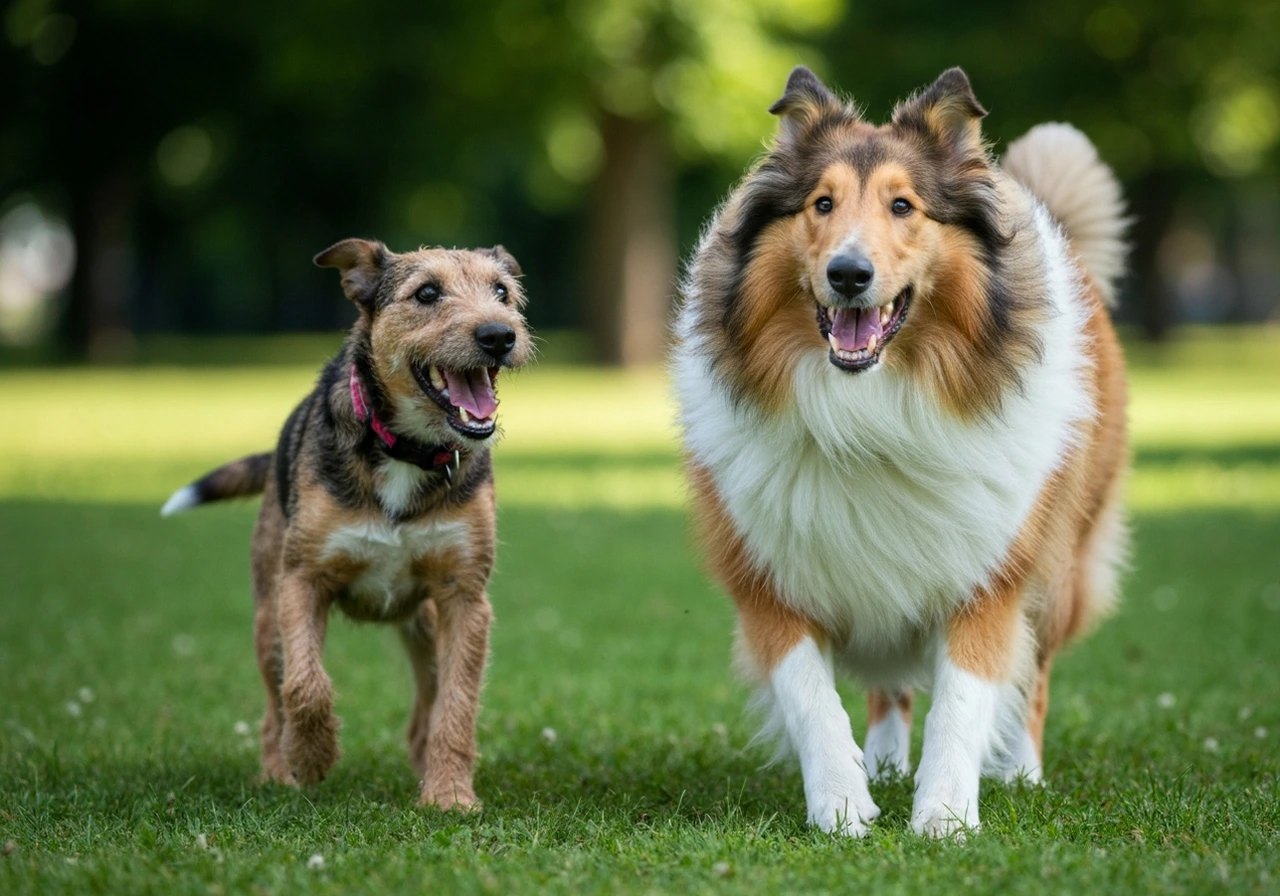
Every certification follows the same basic shape. A veterinarian examines the eye, records what is normal and what is not, and submits the result to a registry. The registry assigns a number and a date. The date matters more than most people realize, because the eye changes. A clear exam at twelve months does not describe the same dog at five years.
The findings are written in shorthand. You will see codes like "normal," or a notation for a specific condition, or a note that the dog was examined but the findings were inconclusive. Inconclusive is not the same as clear. It means the examiner could not see enough, often because of a small pupil or a young dog that would not hold still.
If you are reading a pedigree from another country, the codes may be in another language. That is where a plain-language reference helps. If you are looking at a Russian breed, whether a Russkiy Toy or a laika, the history and the health sections of a resource like this Russian dog breeds guide can tell you which conditions the breed community actually tracks, which is often more useful than decoding a single line of abbreviations.
What an eye certification proves, and what it never proves
It proves three things. The dog existed. The dog was examined on that date. The examiner recorded what they saw.
It never proves the dog is free of inherited eye disease. Many conditions are late onset. A dog can be clear at two and affected at six. It never proves the dog will not produce affected puppies, because a clear dog can still carry a recessive gene. And it never proves the breeder did anything with the information.
This is the part that catches people. A certificate is a data point. A breeding program is a pattern of data points across generations, plus the breeder's willingness to stop using a dog that produces a problem. I have retired dogs that were personally clear because they threw a condition behind them. That decision does not show up on any certificate.
How do breed clubs use eye certification requirements?
Breed clubs set their own expectations, and they vary widely. Some clubs require an annual exam for breeding stock. Some require it once, before a first litter. Some publish a recommended list of examinations rather than a mandate.
Collie clubs, in my experience, have moved toward annual exams and open disclosure. That is a cultural shift, not just a paperwork one. When a club publishes results, buyers can see the whole picture instead of one dog's paper.
For breeds with smaller populations, the calculus is different. A rare breed may have so few breeding animals that a strict rule would shrink the gene pool further. Clubs in that position often recommend exams while leaving the final call to the breeder. That is a judgment call, and it should be made in the open, not hidden.
Where do Russian breeds fit into this picture?
The Russian breeds are not one thing. A samoyed, a Caucasian shepherd, a black Russian terrier, a West Siberian laika, and a Russkiy Toy have different histories, different functions, and different health priorities. Grouping them under one label is a convenience, not a biological fact.
Some of these breeds were shaped deliberately in the Soviet period, with studbooks closed and function driving selection. Others, like the Russkiy Toy, trace back further, to the tsarist era, and carry a documented standard today, FCI 352, covering size, weight, coat varieties, and color. That kind of documented history is useful to a breeder because it tells you what the breed community considers normal, including which health checks it prioritizes.
If you are buying a puppy from a breed with a Russian origin, ask the breeder what examinations the breed club recommends, not just what the seller happens to have on hand. The answer tells you whether the breeder is plugged into a community or working alone.
How should a buyer read a certificate before buying?
Start with the date. If the exam is more than eighteen months old and the dog is still being bred, ask why it has not been repeated.
Then look at the registry. A number you can verify is worth more than a photocopy you cannot. If the breeder cannot tell you which registry issued the number, that is a signal.
Then ask about relatives. A clear dog with an affected sibling is a different breeding proposition than a clear dog from a long line of clear dogs. Certificates describe individuals. Pedigrees describe families.
Finally, ask what the breeder does with a bad result. Anyone can submit a clear dog. The breeders worth buying from are the ones who will tell you what they did when a dog came back affected.
What I tell people at the whelping box
I hand over the certificate, the registry number, and the date, and I say the same thing every time. This paper says my dog was examined. It does not say your puppy will be healthy. What it says is that I showed up, I paid for the exam, and I put the result where you can find it.
That is the whole value of certification. It is a record of a decision to be transparent. The rest, the actual health of the dog in front of you, comes from the breeder's choices over years, and from the luck that no certificate can control.
If you want to understand a breed before you buy into it, read its history. Read its standard. Read what its community argues about. A certificate is one page. The breed is a book.