
Eye Checks and Family Dogs: A Breeder's View
Eye certifications answer one question: does this dog have a known inherited eye condition that a registry recognizes? They do not tell you whether the dog will fit your family, your schedule, or your couch. If you are choosing a dog for a household with kids, older adults, or a rotating cast of visitors, the eye certificate is one line on the page, not the whole page.
What does an eye certification actually tell a family?
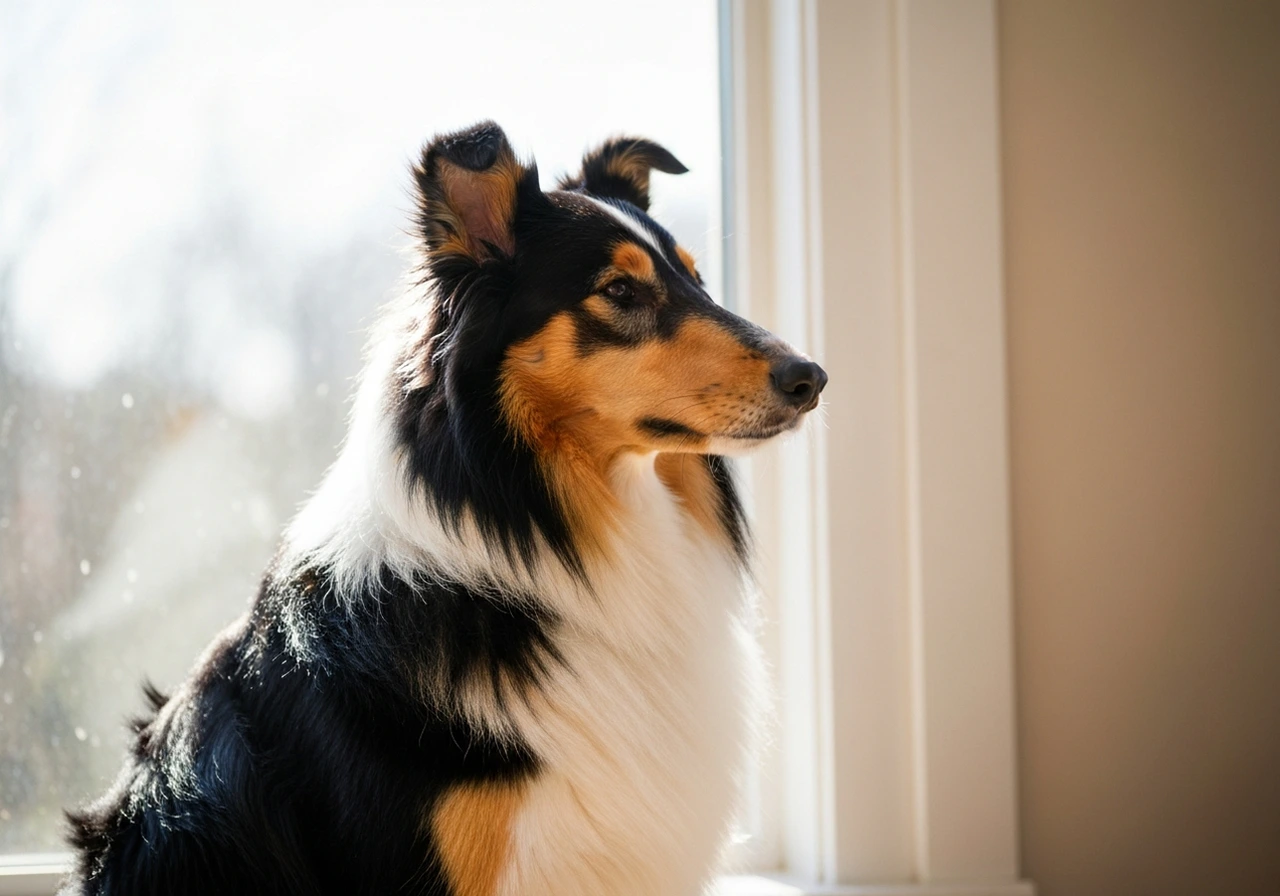
A certification from a registry-approved exam tells you what a veterinary ophthalmologist saw on a specific date. In Collies, the conditions we screen for most often are Collie Eye Anomaly, progressive retinal atrophy, and cataracts. The exam is pass or fail with codes, and those codes describe the eye at that moment. A clear result on a two-year-old dog is useful information. It is not a guarantee about age eight.
What it does not tell you: temperament, noise sensitivity, how the dog handles a toddler grabbing an ear, whether it will herd the family cat, or how much brushing the coat needs. Those are breeder questions, not registry questions. I have placed dogs with clear eyes into homes that did not work out because nobody asked about the household, and I have placed dogs with a known carrier status into homes that were perfect because the family understood the plan.
For families, the practical use of a certification is narrower than people expect. It tells you the breeder is doing the exams and recording results. That habit matters more than any single result. A breeder who exams every litter and publishes the codes is a breeder who will answer the phone in three years.
If you are already involved in rescue or fostering, the same logic applies from the other direction. You often inherit a dog with no paperwork at all, and you have to decide what to do with limited time and money. There is a plain-spoken directory of practical ways to help a dog in a shelter, sorted by how long each task takes and what it costs, at shelter dog volunteer tasks. I have sent new fosters there because it starts with ten-minute jobs instead of asking for a lifetime commitment on day one.
Should eye health change which dog you bring home?
Sometimes yes, and the change is usually about the plan, not the breed. If a dog is a known carrier of a recessive condition, that dog can still be a wonderful family dog. What changes is breeding decisions, not walking decisions. A carrier who is spayed or neutered has no eye risk to pass on and no reason to be excluded from a home.
If a dog has a diagnosed condition that will progress, the family needs to know three things before signing anything: what the condition is, what the expected timeline looks like, and what veterinary costs are likely. A breeder who cannot answer those three questions in plain language is not ready to place that dog. I would rather a family walk away than take a dog they cannot afford to care for at year six.
For families with young children, the bigger risk is not eye disease. It is a dog who was never exposed to noise, grabbing, or chaos. Ask the breeder what the puppy has heard, what surfaces it has walked on, and how it reacts when a metal bowl drops. Those answers predict your first month far better than an eye code.
What should a family ask before they commit?
Ask for the registered names of both parents and the date of their most recent eye exam. Ask which registry issued the certification and whether the results are in the open database. Ask what happens if the dog develops a condition later: does the breeder want a call, a report, or nothing? A breeder who says "call me either way" is the one you want.
Ask about the contract in writing. Ask what the breeder does if you cannot keep the dog at year four. Ask how many litters they have per year and where the dogs live. None of these questions require a veterinary degree, and none of them are rude. I have answered them for twenty-eight years and I still expect them.
Ask about the household, too, and be honest. If you have a five-year-old, say so. If your mother visits every weekend with a walker, say so. If you work ten-hour days, say so. The eye certificate does not care about any of that, but the dog will.
Where does rescue fit into a family plan?
Many families end up in rescue rather than with a breeder, and the questions shift. You may have no eye history at all. You may have a dog who was surrendered with a note that says "eyes fine" and nothing else. In that case, get a baseline exam from a veterinary ophthalmologist within the first month. It costs less than most people expect and gives you a reference point for later.
Rescue also asks something different of families: time. Not money, necessarily, and not a permanent dog. A weekend of first walks, a month of transport relays, a season of fostering. The directory I mentioned earlier organizes those commitments by duration and skill, which is useful when you are not sure how much you can give. Some people start with a ten-minute task and end up coordinating for a whole region. Others do one transport and stop. Both are fine.
If you are a family considering a senior dog, the eye question changes again. Senior dogs often have age-related changes that are not inherited conditions. A cataract in a twelve-year-old is not the same finding as a cataract in a two-year-old. Ask the vet which one you are looking at before you make a decision based on a word.
How do you keep the paperwork useful over time?
Keep the certificate with the dog's other records and note the exam date on your calendar. Re-exam every one to two years if the dog is intact and in a breeding program, and at least once in middle age for a pet. If a breeder tells you a single exam at age two covers the dog's whole life, that is not how inherited eye disease works.
Report changes. If your dog starts bumping into things at night, tell your vet and tell your breeder. Breeders cannot track trends without reports from pet homes. I have learned more from owners who called me at year seven than from any show result.
And keep the certificate in perspective. It is one tool among several. Temperament testing, health clearances for hips and elbows, and honest conversations about the household matter just as much. A family dog is a long project, and the eye exam is one page of the file.
If you want to do something useful this week, pick one task from a shelter's needs list and do it. That habit, more than any certificate, is what makes a dog's life better.