
Entropion and Ectropion: What Eye Certification Says About Eyelid Conditions
Eyelid conformational problems are among the most visible and most preventable hereditary issues in purebred dogs. Entropion — inward rolling of the eyelid — and ectropion — outward rolling — cause real suffering. A dog with entropion has their own eyelashes constantly rubbing against their cornea. A dog with severe ectropion has chronically exposed conjunctival tissue. These are not minor cosmetic issues.
What makes entropion and ectropion particularly important for breeders is that they are directly related to breed-specific conformation standards. In many breeds, the selection pressure for certain head types, skin folds, and facial features has simultaneously increased the tendency toward eyelid problems. Managing this requires understanding how OFA eye certification documents these conditions and what those findings mean for breeding decisions.
What Entropion Is and How It Develops
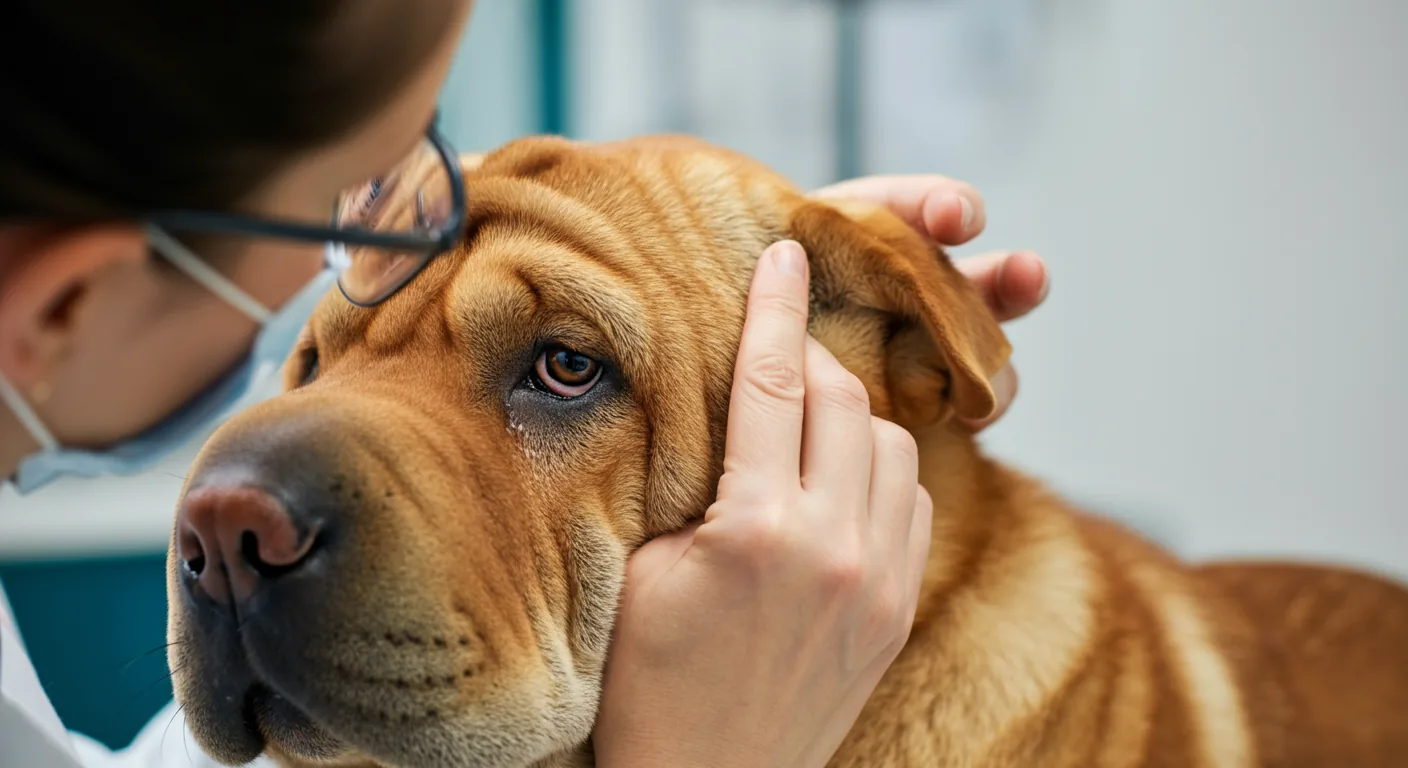
Entropion is the inward rolling of one or more eyelid margins. When the eyelid rolls inward, the skin and hair or eyelashes contact the cornea and conjunctiva directly. This causes chronic irritation, tearing, mucoid discharge, and in severe cases, corneal ulceration, scarring, or pigmentation that can permanently reduce vision.
Entropion can affect the upper eyelid, lower eyelid, or both, and it can be medial (near the nose), lateral (near the temple), or across the full eyelid margin. In some breeds, particularly those with heavy skin folds around the face, medial entropion where the fold of skin near the nose rolls against the eye is the predominant problem.
Primary hereditary entropion is genetically determined by factors influencing head conformation, facial skin laxity, orbit size and shape, and eyelid length relative to orbit circumference. Secondary entropion can develop as a result of trauma, scarring from previous eye disease, or chronic spasm from irritation. For OFA certification purposes, the examiner assesses whether the entropion appears hereditary or secondary in origin.
What Ectropion Is
Ectropion is outward rolling of the eyelid, most commonly the lower lid. The eyelid margin rolls away from the eye, exposing the conjunctival tissue that normally lines the inner surface of the lid. This exposure leads to chronic conjunctivitis, increased susceptibility to foreign material entering the eye, and in severe cases, corneal exposure if the lower lid droops enough to leave the lower cornea unprotected.
Ectropion is most common in breeds bred for large orbital opening and loose facial skin, including Basset Hounds, Bloodhounds, Saint Bernards, Clumber Spaniels, and several other large breed dogs with characteristic drooping lower eyelids. In these breeds, ectropion is so common that breed standards often describe it as acceptable or even desirable in mild form, creating a challenging situation for breeders trying to balance breed type with health.
Combined Diamond Eye
Some breeds develop what is called diamond eye or combined entropion-ectropion, where the central portion of the lower eyelid shows ectropion while the medial and lateral corners show entropion. This pattern is common in breeds like the Saint Bernard and creates a complex clinical picture with elements of both conditions present simultaneously. The OFA exam documents the full picture, noting the location and severity of each component.
How Eyelid Conditions Are Assessed in OFA Certification
An ACVO diplomate performing an OFA eye certification exam evaluates the adnexa — the eyelids, conjunctiva, and surrounding structures — as a standard part of the examination. Entropion and ectropion are documented with their location (upper, lower, medial, lateral) and an assessment of severity. The examiner indicates whether the findings are considered hereditary and whether they are affecting or likely to affect the dog's comfort and corneal health.
Understanding the notation system used for these findings is important. The guide to reading certification codes covers the specific terminology and notation conventions used in OFA documentation for eyelid conditions, including the distinction between conditions noted for informational purposes and those that result in a failed certification.
Not all entropion findings result in a failed exam. Mild medial entropion affecting only a small area of the eyelid may be noted as a Breeder Option finding if the ophthalmologist considers it unlikely to cause clinical problems or to be strongly hereditary for the specific breed. Significant entropion affecting larger portions of the eyelid or causing active corneal irritation is more likely to result in a failed certification.
Breeds Most Affected
Entropion affects a wide range of breeds. In herding breeds, particularly Rottweilers, Labrador Retrievers, and Golden Retrievers, lower lid entropion is relatively common. Chow Chows, Shar Peis, and Bulldogs have high rates related to their characteristic head structure and skin fold anatomy. Small breeds including Pomeranians, English Toy Spaniels, and Cavalier King Charles Spaniels can develop medial entropion associated with their facial conformation.
In some breeds, entropion prevalence has increased over time as selection for exaggerated conformation characteristics has intensified. This is a documented pattern that veterinary ophthalmologists and breed health advocates have raised concerns about for decades. The breed-specific certification requirements guide addresses how different breed clubs have responded to these challenges.
Surgery and Breeding Decisions
Entropion and ectropion can be corrected surgically. In affected dogs with significant clinical signs, surgery provides relief and restores comfort. However, surgical correction raises important breeding questions. A dog whose entropion has been surgically corrected still carries the genetic predisposition that produced the entropion. Their offspring may have the same problem.
Most responsible breeding programs do not breed dogs who have required surgical entropion correction, particularly if the entropion was bilateral or severe. Some breed clubs explicitly require that dogs used for breeding have not undergone entropion surgery. OFA eye certification notes whether the examiner observes surgical scarring consistent with previous entropion repair, which provides transparency in the certification record.
The ethical dimensions of breeding dogs with conditions that will likely cause suffering in some offspring are worth taking seriously. Using a dog with hereditary entropion because they have outstanding conformation or performance titles implicitly prioritizes those qualities over the health of future offspring.
Assessing a Puppy for Eyelid Problems
Eyelid conformational issues may be apparent in young puppies or may develop as facial structure matures through adolescence. Some puppies develop transient entropion during the rapid growth phase between eight and sixteen weeks, which resolves as their faces mature without ever becoming a permanent problem. This juvenile entropion should be distinguished from hereditary primary entropion that persists into adulthood.
If a puppy shows eye discomfort, excessive tearing, or squinting, have an ACVO diplomate examine them promptly. Early entropion that causes corneal irritation can lead to corneal ulceration, which is a veterinary emergency. Early evaluation also provides baseline documentation for the puppy's eyelid conformation that may be relevant later. Puppy eye screening at six to eight weeks can identify eyelid problems alongside hereditary retinal conditions.
Documentation and Transparency
Breeders whose lines have a history of entropion or ectropion serve both their buyers and the breed by documenting this honestly. Include any eyelid notation from OFA certifications in the health documentation provided with puppies. If a puppy has been evaluated and shown normal eyelid conformation, note that. If a parent had a Breeder Option notation for mild entropion, disclose it.
Buyers who receive complete health documentation, including documentation of any minor findings, are better equipped to care for their dogs and to make informed decisions if they choose to breed. The guide for puppy buyers on certification records helps buyers understand what they are receiving and what it means for their dog's long-term care.
Eyelid conformation assessment is more subjective than assessment of internal eye structures. If you have questions about whether a finding on your dog's OFA exam is clinically significant or how it should influence breeding decisions, call the examiner's office. A five-minute conversation can clarify what might otherwise become a source of anxiety or poor decision-making.