
Managing Eye Health Across Multiple Generations
In 2008, a puppy buyer contacted me because their four-year-old Collie had developed cataracts. Both parents had passed their OFA eye exams with Normal results. The sire had three consecutive clear exams. The dam had two. On paper, everything looked perfect. But when I dug into the pedigree, I found something that single-generation testing alone could never have revealed.
The dam's mother, my foundation bitch from a decade earlier, had been noted with a small punctate opacity on one of her later exams. At the time, it was classified as age-related and not hereditary. The dam's maternal grandsire, a dog I had used through outside breeding, had no eye records at all because his owner had stopped testing after the dog's second year. And the sire's paternal grandmother had produced two offspring in another breeder's program that developed cataracts by age five.
None of this was visible looking at just the parents. It only became clear when I mapped eye health data across multiple generations. That experience changed how I approach eye health in my breeding program. Individual certifications matter, but they tell an incomplete story. The real power of eye health data comes from tracking it across pedigrees and generations.
Why Single-Generation Testing Falls Short
An OFA eye certification tells you that a specific dog's eyes were normal on a specific date. That is valuable information, but it has inherent limitations that become obvious when you think about how hereditary eye conditions actually work.
Many eye conditions are caused by recessive genes. A dog carrying one copy of a recessive mutation shows no clinical signs. Both parents can pass eye exams with flying colors while each carrying a copy of the same recessive gene. Breed together two carriers and a quarter of the offspring will be affected. The individual certifications gave no warning because carriers look clinically normal.
Late-onset conditions create another blind spot. Progressive Retinal Atrophy in some breeds does not manifest until age four, five, or even later. A dog certified at age two is clear at that moment, but may develop PRA at age six. If that dog has already produced several litters by then, the genetic problem has been spread before the parent's own eyes showed any sign of it.
Multi-generational tracking addresses both of these gaps. When you know that a dog's granddam produced cataracts in her offspring, or that a grandsire was never tested past age three, you have context that individual certifications cannot provide. That context shapes better breeding decisions.
A single eye certification is like a snapshot. Multi-generational tracking is like a documentary. The snapshot shows one moment in time for one dog. The documentary reveals patterns, trends, and risks that only become visible over years and across related animals. Both are useful. But only the documentary gives you the full picture.
Building a Generational Eye Health Database
The foundation of multi-generational eye health management is organized record keeping. You need a system that lets you quickly access eye certification data for any dog in your pedigrees, going back as many generations as possible.
What to Record for Each Dog
For every dog in your pedigree database, whether you own them or not, try to collect and record the following eye health data:
- OFA eye certification numbers and dates: Every certification for every year tested.
- Exam findings: Not just pass or fail, but specific findings noted on each exam form. A dog with "Normal" across the board is different from one with "Breeder Option: mild PPM."
- DNA eye test results: Clear, carrier, or affected status for every relevant mutation tested. These results are permanent and only need to be recorded once.
- Age at each exam: Important for tracking age-related changes and determining whether testing continued long enough to rule out late-onset conditions.
- Last known eye status: Did the dog continue testing throughout life? Was there ever a failure? Did anything change in later years?
- Offspring eye data: Crucially, what happened in the offspring. Did any produce affected puppies? Were there patterns of specific findings in descendants?
Where to Get Historical Data
Gathering eye data for dogs you did not breed or own requires some detective work, but it is more accessible than you might think.
The OFA database is your primary resource. Search by registered name or registration number, and you will find every certification on file. This covers most actively tested dogs from the past two decades. For older dogs or dogs whose owners did not submit to OFA, you may need to contact the breeders directly.
Breed-specific databases maintained by parent clubs sometimes contain historical eye data that predates widespread OFA submission. The Collie Club of America, for example, has health records going back decades that can fill in gaps for foundation stock.
Other breeders are often willing to share eye records for dogs in their programs, especially when you explain that you are building pedigree health data. I have contacted breeders I have never met to ask about eye history on dogs that appear in my pedigrees. Most are happy to share, and the conversations often reveal useful information about health patterns in shared lines.
When you cannot find eye records for a dog in the pedigree, that absence is itself informative. A dog with no eye certification history introduces unknown risk. Maybe the dog was tested and never submitted results. Maybe the dog was never tested at all. Maybe the dog failed and the owner chose not to register the result. You do not know, and that uncertainty should factor into your breeding decisions. In my own records I flag these dogs in a distinct color so I can see at a glance how many unknowns sit in any proposed pedigree — when two or three undocumented dogs cluster within four generations of a planned breeding, I treat the cross as higher risk regardless of how clean the visible exams look.
Identifying Patterns Across Generations
Once you have multi-generational data assembled, patterns emerge that single-generation testing hides. Here are the most important patterns to look for.
Carrier Lines
If a dog produced even one affected offspring for a recessive condition, that dog is a confirmed carrier. Both parents of an affected dog are carriers by definition. Map these carrier statuses back through the pedigree and you can identify lines with higher carrier probability, even for dogs that were never DNA tested.
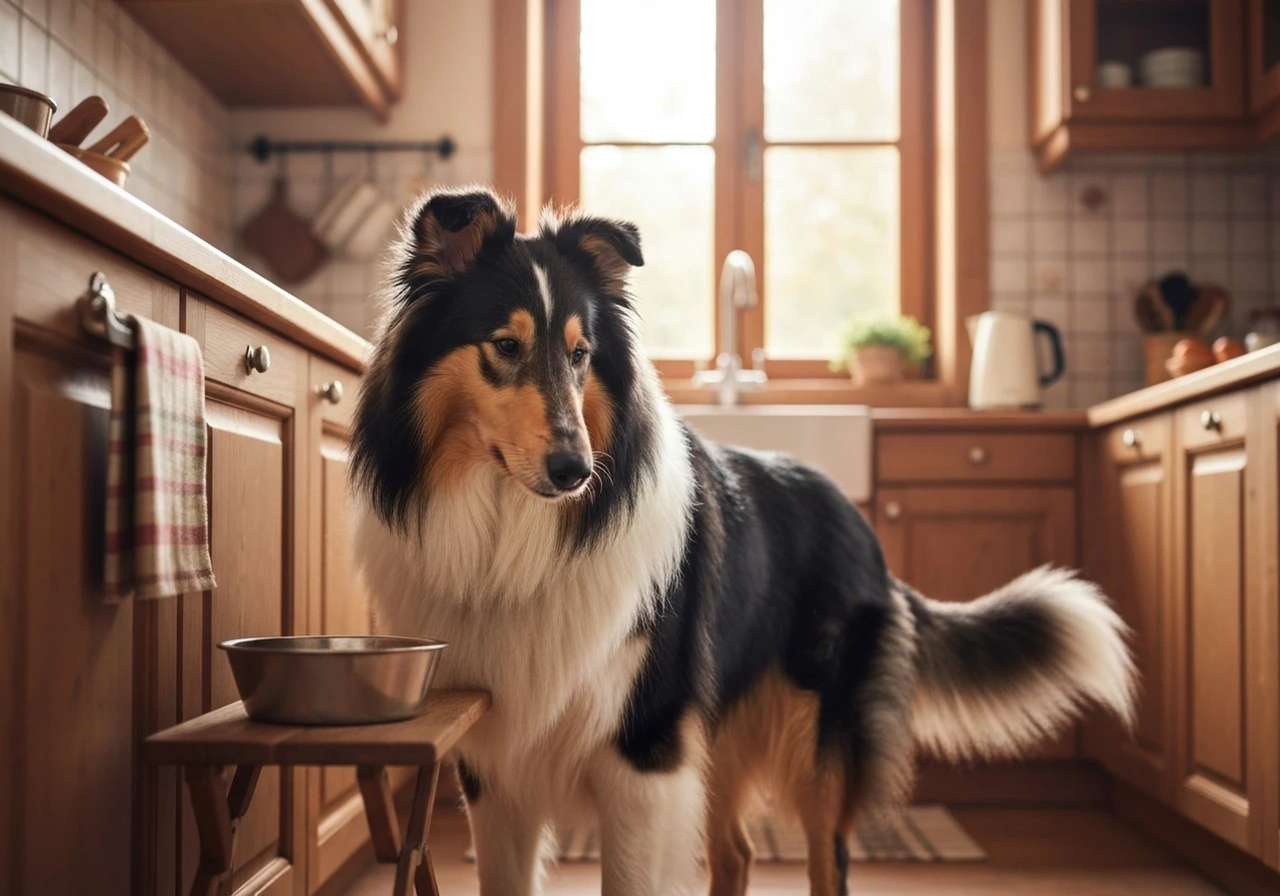
In my Collie program, I traced Collie Eye Anomaly carrier status back through five generations before DNA testing was available, purely from knowing which dogs produced affected offspring. When DNA testing for CEA became available in the mid-2000s, my pedigree predictions matched the genetic results with remarkable accuracy. The pedigree analysis had already given me the information that DNA testing later confirmed.
Late-Onset Condition Clusters
If multiple dogs from the same line develop cataracts or PRA after age five, that is a pattern even if individual parents passed their earlier exams. Track when conditions appear relative to the dog's age and note which lines produce late-onset problems. This is especially important for late-onset PRA, where parents may have been certified clear during their breeding years but developed signs later.
I know a Labrador breeder who tracked hereditary cataracts across her pedigrees and discovered that a widely used stud dog from fifteen years earlier was the common ancestor behind most cataract cases in her line. By the time the pattern was identified, three generations of dogs had been produced. Multi-generational tracking would have caught the cluster earlier.
Testing Gaps
When you map out eye testing data across a pedigree, gaps become visible. A grandparent who was only tested once at age two, then never again. A great-grandparent with no records at all. A sire who was tested for three years but then stopped, coincidentally right around the age when late-onset conditions typically appear.
These gaps do not necessarily mean problems exist. But they mean you cannot rule out problems. A dog tested consistently from age one through age eight with all-clear results is a much stronger foundation than a dog tested once at eighteen months.
Practical Tools for Pedigree Eye Health Tracking
You do not need expensive software to track multi-generational eye health, though dedicated pedigree programs help. Here is what works at different levels of complexity.
Spreadsheet Method
A simple spreadsheet with columns for dog name, registration number, OFA eye numbers, exam dates, findings, DNA results, and offspring notes handles most needs. Sort by family lines to see patterns. Color-code entries by result status: green for clear, yellow for breeder option, red for fail, gray for untested.
I started with a spreadsheet in the early 2000s and still maintain it alongside more sophisticated tools. The spreadsheet has grown to include over 200 dogs across my breeding program and related lines. Sorting by family group immediately reveals which lines have the strongest eye health documentation and which have gaps.
Pedigree Software
Dedicated pedigree programs like BreedMate, Breeders Assistant, or PedFast allow you to attach health data to individual dogs and view it in pedigree format. This makes it easier to visualize eye health status across generations because you can see a five-generation pedigree with eye status noted for each dog.
The advantage of pedigree software is visual context. When you are evaluating a potential breeding, you can pull up the trial pedigree and immediately see which ancestors were tested, which were clear, which had findings, and which are unknown. That visual overview is harder to achieve with spreadsheets alone.
OFA Online Database
The OFA database itself serves as a partial multi-generational resource. For dogs with extensive OFA records, you can trace certifications through related animals. The limitation is that OFA only shows dogs that were submitted, and the database does not connect relatives automatically. You need to know which dogs to search for and build the connections yourself.
Using Multi-Generational Data in Breeding Decisions
The whole point of tracking eye health across generations is to make better breeding decisions. Here is how that works in practice.
Evaluating Potential Breeding Partners
When considering a breeding, I look at eye health data for both prospective parents going back at least three generations. I want to see that both sides of the pedigree have consistent, well-documented eye health. If one side has strong documentation and the other has gaps or concerning patterns, that affects my decision.
For outside stud dogs, I request the same level of pedigree eye data that I maintain for my own dogs. This means current OFA certification, historical exam records, DNA results, and whatever eye data is available on parents and grandparents. A stud dog with a single eye certification and no pedigree context is a bigger gamble than one with deep generational data.
Calculating Risk When Data Is Incomplete
Perfect data across five generations is rare. You will always have gaps, especially in earlier generations. The question is how to weigh incomplete information.
My approach is conservative. A missing generation of eye data is not the same as a clear generation. I treat unknown status as moderate risk rather than assuming everything was fine. If a dog's grandsire was never eye tested, I do not assume he was clear. I acknowledge the uncertainty and factor it into my planning.
This conservative approach has served me well. I have passed on breeding combinations that looked good on paper because the pedigree eye health data was too incomplete to give me confidence. In a few cases, subsequent information proved those concerns were justified. In others, I may have been overly cautious. But erring on the side of caution with hereditary disease is rarely a mistake.
When to Accept Higher Risk
Sometimes a breeding with less-than-ideal pedigree eye data makes sense because the dog offers exceptional quality in other areas. Genetic diversity, structural excellence, working ability, or rare bloodlines may justify accepting some eye health uncertainty.
In these cases, mitigate risk where you can. Ensure the dog itself has thorough current clinical eye exams and comprehensive DNA testing. Plan to screen the resulting litter aggressively. Monitor offspring for longer than usual before placing them in breeding programs. Accepting higher risk is reasonable when done knowingly and with a plan for managing that risk.
Multi-Generational Data Checklist
- Parents: Current OFA eye cert + DNA panel + full exam history
- Grandparents: OFA records + known findings + offspring outcomes
- Great-grandparents: Any available OFA records + known eye issues
- Siblings of parents: Eye status if available (informative for carrier risk)
- Half-siblings: Eye outcomes for dogs sharing a common parent
Sharing Data With Other Breeders
Multi-generational eye health tracking works best when breeders share information. Your pedigree overlaps with other breeders' pedigrees, and their data fills in your gaps just as yours fills in theirs.
I make eye health data for my dogs available to anyone who asks. When another breeder is evaluating one of my dogs or a descendant of my dogs for a breeding, I provide complete eye records going back as far as I have them. This transparency benefits the breed, not just my program.
Some breed clubs maintain shared health databases where breeders can contribute eye data. The Collie Health Foundation has worked on this concept, and several breed-specific health registries aggregate data from multiple breeders. Contributing to these databases multiplies the value of your individual records.
The most transparent breeders publish their health data publicly. OFA results are already publicly searchable, but some breeders go further by maintaining health pages on their websites with detailed results and interpretations. This level of openness raises the standard for the entire breeding community.
Common Mistakes in Multi-Generational Tracking
Only Tracking Your Own Dogs
Your pedigrees include dogs you did not breed. Those dogs' eye data matters as much as your own. The stud dog you used from another kennel, the foundation bitch's dam from a different breeder, the imported grandsire from overseas. All of these contribute genetic material and their eye health status matters.
Stopping Data Collection When Dogs Leave Your Program
Puppies you sell may develop eye conditions later in life. That information is incredibly valuable for evaluating your breeding decisions. Encourage your puppy buyers to share health updates. Some breeders include this as a request in their sales contracts. Knowing that a dog from your 2020 litter developed cataracts at age four tells you something about the genetics behind that breeding.
Ignoring Breeder Option Findings
Minor findings noted as "Breeder Option" are easy to dismiss individually. But when you see minor PPM in a parent, a grandparent, and two half-siblings, that pattern suggests a hereditary predisposition even if no individual finding was severe enough to fail certification. Track breeder option findings with the same attention you give to outright failures.
Assuming DNA Testing Eliminates the Need for Pedigree Analysis
DNA testing has transformed breeding for specific known conditions, but it does not cover every hereditary eye disease. Conditions without DNA tests, complex genetic conditions involving multiple genes, and newly emerging problems in a breed all require pedigree analysis because genetic testing alone cannot detect them. Multi-generational tracking remains essential even in the age of genomics.
How I Use This in My Program Today
After twenty-eight years, my pedigree eye health database covers seven generations for my core line. Every dog I have bred or used in a breeding has eye data recorded, and I have tracked offspring outcomes through puppy buyer reports and follow-up communications.
When I plan a breeding, the pedigree eye health analysis is one of the first things I review. I pull up both sides, check for overlapping ancestors with known issues, verify that testing gaps are not concentrated in the same area of the pedigree, and assess overall confidence in the eye health of the prospective combination.
This process has prevented me from making at least three breedings that looked excellent from a conformation and temperament standpoint but had concerning eye health patterns in the pedigree. In two of those cases, I found alternative stud dogs with comparable quality and stronger eye health documentation. The third combination eventually happened after the stud's owner obtained more generational data that addressed my concerns.
The time investment in maintaining this database is real but manageable. I spend perhaps two hours per month updating records, following up with puppy buyers, and researching eye data for dogs in pedigrees I am evaluating. Compared to the cost and heartbreak of producing puppies with hereditary eye disease, that time investment pays for itself many times over. Scheduling regular eye clinic events at dog shows makes it easier to keep current data flowing into the system year after year.
You do not need seven generations of data to benefit from multi-generational tracking. Start with what you have. Record eye data for the dogs you own. Add data for their parents and grandparents as you find it. Over time, your database grows and its value compounds. The breeder who starts tracking today will have three generations of data in ten years, and that data will inform better breeding decisions for every litter produced along the way.