
Preparing Your Dog for an Eye Certification Exam
The first time I brought a dog in for an eye certification exam, I made almost every mistake possible. I had applied a topical flea treatment near his face two days before. I forgot his registration papers. I did not know that certain eye drops my regular vet had prescribed would interfere with dilation. The ophthalmologist was patient about it, but we had to reschedule the exam entirely because the medication I had been using made an accurate evaluation impossible.
That was 1998, and I have spent the twenty-eight years since learning what actually matters when you are preparing a dog for an eye certification exam. Most of it is straightforward, but the details trip people up. A little preparation goes a long way toward making the appointment smooth, stress-free, and productive for everyone involved.
This guide covers everything I have learned about preparing dogs for eye certification exams, from the week before to the moment you walk into the examination room.
A well-prepared dog produces better examination results. Stress, medications, and environmental factors can all affect the examiner's ability to evaluate the eyes accurately. Taking the time to prepare properly means fewer rescheduled appointments, more reliable results, and less stress for your dog.
One Week Before the Exam
Review Current Medications
This is the single most important preparation step, and the one most breeders overlook. Several common medications can interfere with a thorough ophthalmic examination, and some need to be discontinued well before the appointment.
Tropicamide is the standard mydriatic agent used to dilate pupils during eye exams. If your dog is already receiving any ophthalmic medication, the examiner needs to know because some drugs affect pupil response, lens clarity, or intraocular pressure readings. Specifically, watch for:
- Topical corticosteroids (eye drops or ointments): Prednisolone acetate, dexamethasone, and similar steroid drops can mask inflammatory signs and affect the examiner's ability to detect certain conditions. Tell your ophthalmologist if your dog has used any steroid eye drops in the past month.
- Atropine eye drops: Atropine causes prolonged pupil dilation that can last days or even weeks. If your dog has had atropine recently, the examiner cannot properly assess pupil function. You may need to reschedule.
- Topical NSAIDs: Flurbiprofen, diclofenac, and ketorolac eye drops can reduce pupil dilation response. Discontinue at least 48 hours before the exam if your vet agrees.
- Topical flea and tick products: Some spot-on treatments applied near the head can cause temporary eye irritation or tearing. Apply these after the exam, not before.
Do not stop any medication without consulting your regular veterinarian first. Some medications, particularly those treating glaucoma or active infections, should not be interrupted. Instead, inform the ophthalmologist about everything your dog is receiving and let them decide how to proceed.
Gather Your Paperwork
Get your documents together ahead of time so you are not scrambling the morning of the appointment. You will need:
- Registration papers: AKC, UKC, or whatever registry your dog is registered with. The OFA form requires the registration number.
- Microchip or tattoo number: OFA uses permanent identification to verify which dog was examined.
- Previous eye exam results: Bring copies of any prior OFA eye certifications. This gives the examiner context and helps them track changes over time. Understanding what those certification codes mean will also help you discuss results more effectively.
- DNA test results: If your dog has been tested for hereditary eye conditions through DNA panels, bring those results. They provide important context alongside the clinical exam.
- Health history: Any relevant medical history, particularly eye-related issues, surgeries, or treatments.
Confirm the Appointment Details
Call the ophthalmologist's office a few days before to confirm your appointment and ask any last-minute questions. If you are attending a clinic event at a dog show, check the event schedule for any changes. I have shown up to clinic events that were rescheduled or moved to a different building, and it is not fun to discover that with four dogs in your car.
Ask specifically about payment methods. Some clinic events are cash or check only. Some private practices require payment at time of service. Knowing this in advance avoids awkward situations at the front desk.
The Day Before
Grooming Around the Eyes
The examiner needs clear, unobstructed access to both eyes. If your breed has facial hair that falls over the eyes, clip or pin it back. For breeds with heavy facial furnishings like Old English Sheepdogs, Bearded Collies, or Tibetan Terriers, this is essential. I have seen dogs turned away because the examiner literally could not see the eyes through the coat.
For my Collies, grooming is not usually an issue because the facial hair is relatively short. But I still clean around the eyes with a damp cloth to remove any discharge or staining. A clean face makes for a more comfortable exam and a better impression on the ophthalmologist.
Do not use any grooming products near the eyes. No whitening powders, no tear stain removers, no eye rinses. These can interfere with the examination or cause irritation that clouds the results.
Exercise and Rest
Give your dog normal exercise the day before. A dog that has been cooped up all day will be antsy and harder to examine. A dog that just ran agility for three hours will be tired but may have increased intraocular pressure from exertion. Normal activity, normal rest.
If your dog is a nervous type, consider a calm walk rather than an exciting play session. You want them relaxed, not amped up.
Morning of the Exam
Feeding
Feed your dog normally. Unlike some medical procedures, eye exams do not require fasting. A hungry dog is often a stressed dog, and stress can affect pupil response and behavior during the exam. That said, do not feed a giant meal right before a long car ride. Use common sense.
I usually feed breakfast about two hours before we leave. That gives them time to eat, digest a bit, and have a bathroom break before loading up.
The Car Ride
If your dog gets car sick, plan accordingly. Motion sickness can cause excessive tearing, reddened eyes, and general misery that complicates the exam. For dogs prone to travel sickness, talk to your vet about anti-nausea medication well ahead of time, and verify with the ophthalmologist that it will not interfere with the examination.
Keep the car well-ventilated. Dogs panting heavily in a hot car arrive with dry eyes, which can affect the exam. If you are traveling more than an hour, bring water and a small bowl so they can drink when you arrive.
What to Bring
Exam Day Checklist
- Registration papers with registration number
- Microchip/tattoo documentation
- Previous OFA eye certificates
- DNA test results for hereditary eye conditions
- Current medication list
- Leash, collar, and a spare leash
- Treats for positive reinforcement
- Water bowl and water
- Towel or blanket for waiting
- Payment (cash, check, or card as required)
- Crate or exercise pen for clinic events
Reducing Exam Day Stress
Desensitization for First-Time Dogs
If this is your dog's first eye exam, do some preparation to make the experience less alarming. The exam involves someone shining bright lights directly into the dog's eyes while holding the head steady. That is unsettling for dogs who have never experienced it.
In the weeks before the exam, practice holding your dog's head gently and looking into their eyes with a penlight or small flashlight. Do not shine it directly into the pupil since that is the ophthalmologist's job, but get the dog accustomed to having their face handled and light directed near their eyes. Pair each session with treats so they associate the experience with something positive.
I start this with my puppies well before their first screening exam. By the time they see the ophthalmologist at eight weeks, they are comfortable having their faces handled and do not panic when the light comes out. Puppies that have been gently exposed to this kind of handling are noticeably calmer during exams.
Managing Anxious Dogs
Some dogs are genuinely anxious about veterinary examinations regardless of preparation. If your dog falls into this category, consider these strategies:
- Arrive early and take a walk. Let the dog stretch their legs, sniff around, and settle into the new environment before going inside.
- Bring a familiar blanket or toy. Something from home that smells right can be calming.
- Stay calm yourself. Dogs feed off our anxiety. If you are nervous, they will be nervous. Project confidence even if you do not feel it.
- Use high-value treats. Reserve something special, like freeze-dried liver or cheese, for the exam. The dog should associate the ophthalmologist's office with the best treats they ever get.
- Consider a Thundershirt or calming wrap. These work for some dogs and are completely harmless if they do not help.
What I do not recommend is sedation. Sedatives affect pupil response and can make it difficult or impossible for the examiner to perform an accurate evaluation. If your dog is so anxious that they cannot be examined without sedation, talk to the ophthalmologist about options. Some are willing to work with mildly sedated dogs in special circumstances, but this should be a last resort.
At the Clinic
The Waiting Period
When you arrive, the first thing that happens is dilation drops. The technician will instill tropicamide drops into both eyes, and then you wait twenty to thirty minutes for full dilation. This is normal and necessary. The drops sting slightly, and your dog may blink excessively or rub at their face for a minute or two afterward.
During the waiting period, keep your dog calm and comfortable. Do not let them rub their face on the ground or scratch at their eyes. A gentle chin scratch from you is fine. If you are at a busy clinic event with many other dogs, keep some distance to reduce stress and prevent any squabbles.
This waiting period is a good time to fill out paperwork if you have not already. Make sure the registration number, microchip number, and all owner information is correct on the form.
During the Examination
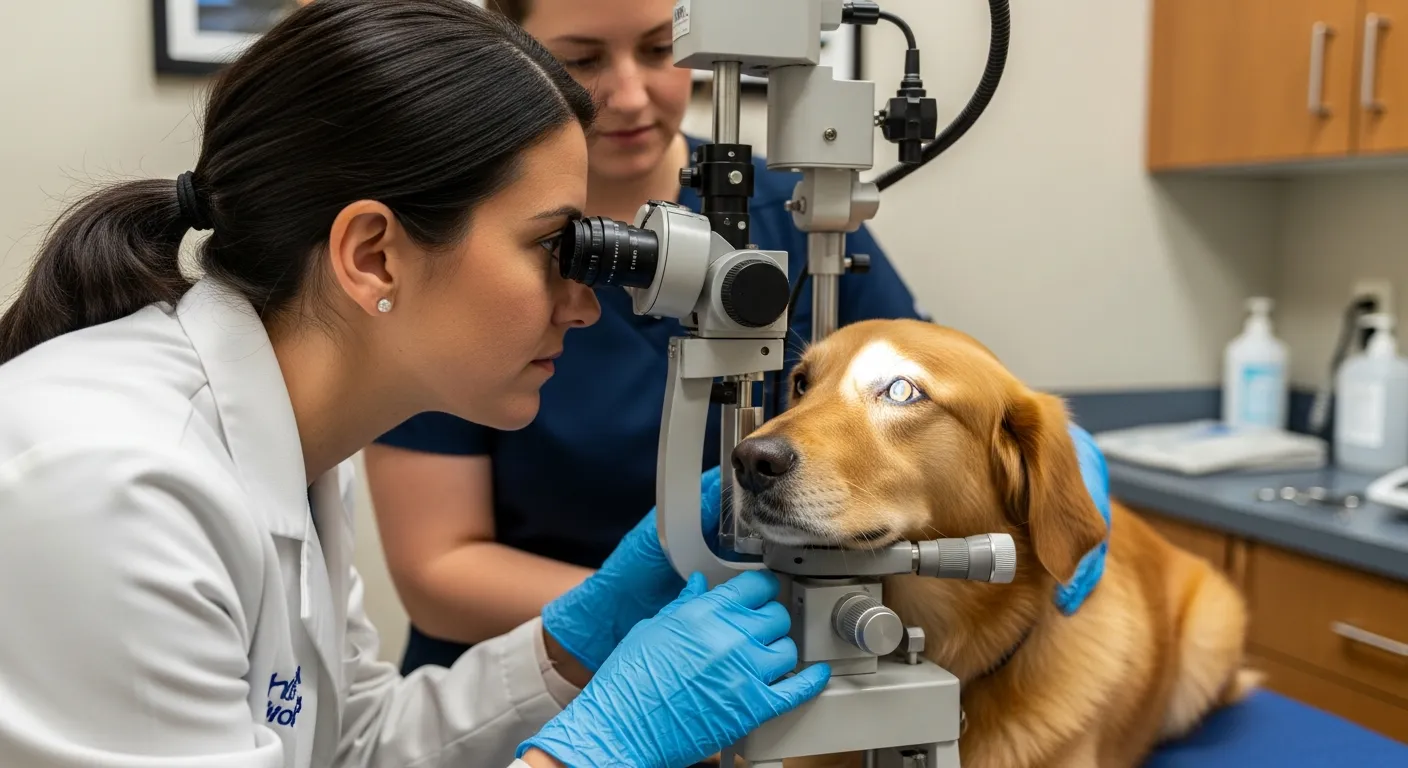
The actual exam usually takes ten to fifteen minutes. The ophthalmologist will use indirect ophthalmoscopy and a slit lamp to examine both eyes systematically. They evaluate the adnexa, anterior segment, and posterior segment, looking for any abnormalities.
Your job during the exam is to keep your dog still and calm. The ophthalmologist or a technician may hold the head, or they may ask you to do it. Follow their instructions. If your dog is struggling, do not panic. A brief pause to let the dog settle is normal and expected.
If the examiner finds something, they will usually tell you during the exam or immediately afterward. Do not be afraid to ask questions. Understanding what they observed and what it means for your breeding program is the whole point of being there. If you are not sure what a specific finding means, my guide to certification codes can help you follow the conversation.
After the Exam
Immediate Aftercare
Your dog's pupils will remain dilated for several hours after the exam. During this time, they will be sensitive to bright light. If it is a sunny day, keep them shaded or in the car with good ventilation. Do not leave them standing in direct sunlight with dilated pupils since it is uncomfortable and unnecessary.
Some dogs are a bit disoriented with dilated pupils, especially if they are not used to it. They may bump into things or misjudge distances. Keep them on leash and guide them carefully. Do not let them jump off elevated surfaces or navigate stairs quickly until their vision returns to normal.
Vision usually returns to normal within four to six hours, though some dogs take longer. By the next morning, everything should be completely back to normal.
Understanding Your Results
The examiner will document findings on the standardized OFA form. You will receive a copy, and the original goes to OFA for registration (if you choose to register). Results fall into three general categories:
- Normal/Clear: No hereditary eye disease detected. This is what you want.
- Breeder Option: A minor finding was noted that the examiner does not consider significant enough to warrant failing the dog. You decide how to use this information in your breeding program.
- Failed: A hereditary eye condition was identified. The dog should not be bred for this condition.
For detailed information about specific findings and codes, see my guide to reading eye certification codes. If your breed has specific requirements beyond the standard exam, check the breed-specific requirements guide to make sure you have met all obligations.
Special Situations
Puppies Under 12 Weeks
Puppy eye screening exams, typically done between six and eight weeks of age, are different from adult certification exams. The puppies are smaller, squirmier, and the conditions you are screening for are different. For breeds susceptible to Collie Eye Anomaly, this early screening is critical because CEA findings can become harder to detect as the puppy matures due to a phenomenon called the "go-normal" effect.
For puppy exams, the preparation is simpler. Make sure the puppies are clean, healthy, and have had a chance to nurse or eat before the appointment. Bring the entire litter in a secure puppy pen or crate. Have the dam's registration number available since the examiner will want to note the litter information.
Senior Dogs
Older dogs may develop age-related changes that are not hereditary. Nuclear sclerosis, for example, is a normal aging change in the lens that is sometimes confused with cataracts by general practitioners but is easily distinguished by a board-certified ophthalmologist. If your senior dog is still in a breeding program, continuing annual exams helps differentiate between hereditary conditions and age-related changes.
Senior dogs may also need extra patience during the exam. Arthritis, hearing loss, or cognitive changes can make them less cooperative. Let the ophthalmologist know about any age-related issues so they can accommodate.
Multiple Dogs on the Same Day
If you are bringing several dogs, plan the logistics carefully. Each dog needs dilation time, so stagger them if the clinic allows it. At clinic events, I bring all my dogs in at once for dilation drops, then they are all ready around the same time.
Have a helper if possible. Managing four dogs on leashes while filling out paperwork in a busy clinic is a circus act. I learned this the hard way and now always bring someone along when I have more than two dogs to examine.
Find another breeder who tests regularly and coordinate your appointments. You take turns holding each other's dogs, managing paperwork, and keeping the process moving. My friend Diane and I have been doing this for fifteen years. It makes clinic days manageable and even enjoyable.
Common Mistakes to Avoid
Over nearly three decades of eye certifications, I have seen breeders make every possible preparation mistake. Here are the ones that come up most often:
- Not disclosing medications. The ophthalmologist cannot give accurate results if they do not know what the dog is receiving. Disclose everything, including supplements and topical products.
- Using eye drops the morning of the exam. Even artificial tears can temporarily affect the corneal surface. Skip everything on exam day unless medically necessary.
- Bringing an overstimulated dog. A dog that just spent two hours playing at the dog show is not going to sit still for an exam. Give them time to decompress before the appointment.
- Forgetting registration papers. Without the registration number, the OFA form is incomplete. I keep photocopies of all my dogs' registrations in a dedicated folder specifically for vet appointments.
- Scheduling immediately after strenuous activity. Intense exercise can temporarily elevate intraocular pressure. Schedule the exam for a calm day, not right after a herding trial.
- Applying grooming products near the eyes. Chalk, powder, hairspray, whitening agents, all of these can irritate the eyes and compromise the exam.
- Not bringing previous results. The whole point of annual testing is tracking changes. Without prior results, the examiner has no baseline for comparison.
Making It Routine
The best preparation advice I can give is to make eye exams a normal part of your breeding program rather than a stressful special event. When your dogs are examined annually from puppyhood onward, they become accustomed to the process. My veteran dogs walk into the ophthalmologist's office, sit calmly for dilation drops, and practically yawn through the exam. That level of comfort only comes from consistent, positive experiences over time.
Schedule all your annual exams around the same time each year. I do mine every January, which coincides with the start of my breeding season and gives me fresh certifications for any litters planned that spring. Pick a time that works for your calendar and your ophthalmologist's schedule, then make it a standing appointment.
Eye certifications are a cornerstone of responsible breeding, and good preparation makes them straightforward. A calm, well-prepared dog gives the examiner the best possible conditions for an accurate evaluation, which is what this is all about: getting reliable information to make sound breeding decisions.
An annual eye certificate is one line in a dog's health file, and the rest of that file depends heavily on where the dog lives. In the American South the calendar is not the show circuit's: heartworm, hookworm and ticks run all twelve months, and the heat rewrites the exercise rules. Magnolia Dog Journal reads dog health in the South at the source, month by month, which is exactly the other half of the file this page only touches.