
Stud Dog Eye Certification: What Every Breeding Owner Should Require
A popular stud dog can produce dozens of litters per year. If that dog carries a hereditary eye disease, his influence on the breed population can be enormous before anyone realizes there is a problem. This is why stud dog eye certification is not just courtesy — it is essential due diligence for any bitch owner considering a breeding.
Over the years I have turned down more than one stud dog despite stellar conformation and impressive titles. In several cases, the stud owner was offended. In every case, I was right to decline, and some of those dogs later produced offspring with hereditary eye conditions that damaged breeding programs in my breed community. Being thorough is not insulting. It is professional.
Minimum Documentation to Require
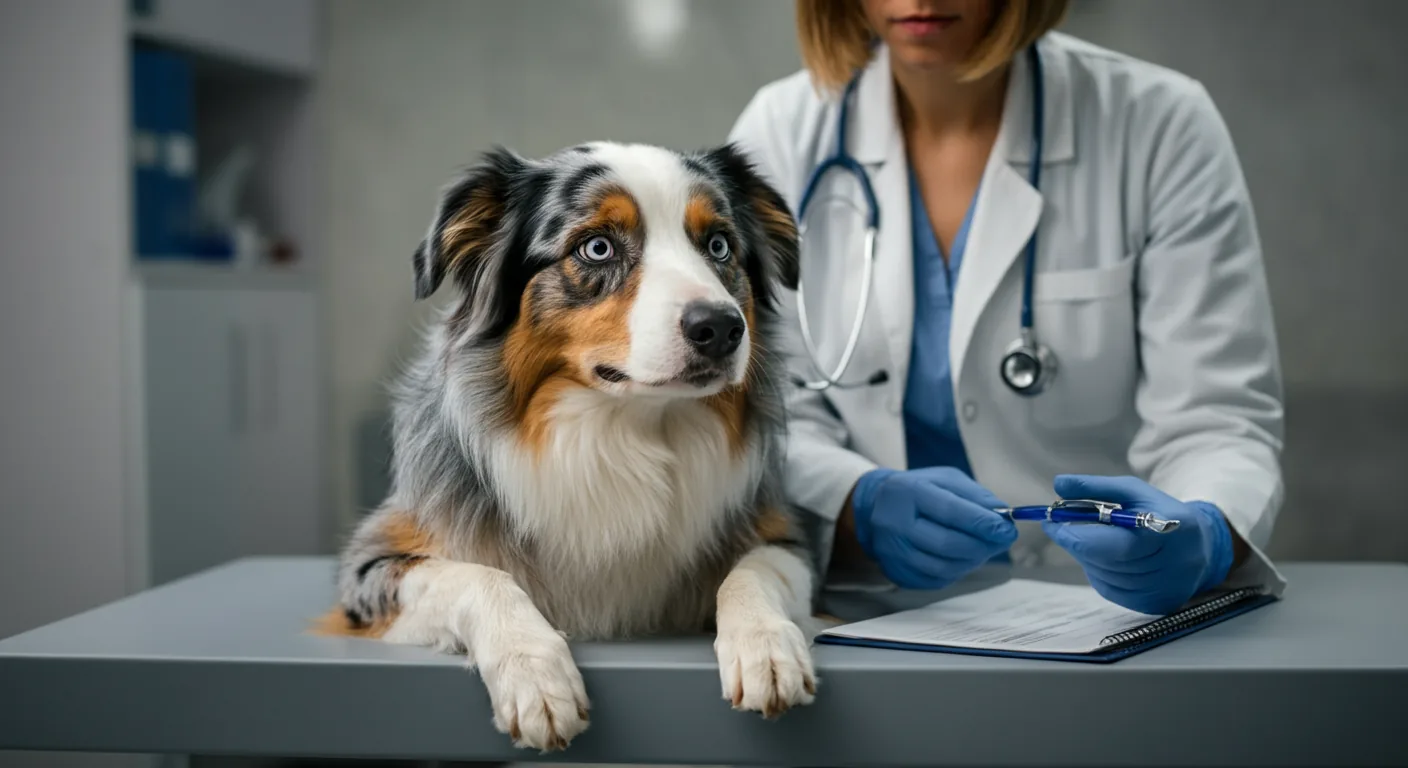
At minimum, any stud dog you are considering should have a current OFA Eye Certification. Current means the exam was performed within the past twelve months. Certifications expire after one year, and a dog that was clear at age two may develop conditions by age five, particularly for late-onset conditions like progressive retinal atrophy or adult-onset cataracts. A stud dog that has been actively used for breeding without annual recertification is a red flag, not a minor detail to overlook.
Ask for the OFA registration number and verify it directly in the OFA database at ofa.org. The verification takes thirty seconds. Some breeders provide paperwork that looks official but represents outdated or incomplete results. Checking the database yourself eliminates ambiguity. The guide to reading certification codes helps you interpret what you see in the database.
Beyond the current certification, ask for the stud dog's complete eye exam history going back as many years as available. A dog with seven consecutive clear annual exams tells a very different story than a dog getting his first exam at age six when his owner wants to breed him.
Breed-Specific Considerations
Different breeds have different hereditary eye disease profiles, and a thorough stud dog evaluation accounts for the specific conditions relevant to your breed. For Collie breeders, CEA status is paramount. For Labrador breeders, PRA and hereditary cataracts take priority. For Cocker Spaniel breeders, lens changes and PPM are the focus.
Review the breed-specific certification requirements for your breed before evaluating any stud dog. Your breed club may have specific requirements that go beyond the basic OFA eye certification, including DNA testing for known mutations or gonioscopic examination of the drainage angle for breeds prone to glaucoma.
Evaluating Pedigree Eye Health
A stud dog's own certification is only part of the picture. What his parents and grandparents looked like matters as much as his personal results. A dog with clear eyes whose dam failed her eye exam at age four should be evaluated very carefully, particularly for late-onset conditions that might not yet be apparent in a young stud.
Many experienced breeders will not consider a stud dog unless they can verify eye health results for at least three generations. This requires research into the OFA database and sometimes direct communication with other breeders who have worked with those lines. It is time-consuming but worth doing for a breeding you have invested months in planning.
Look for patterns across generations. If the stud dog's line consistently produces Breeder Option notations for a particular condition, even if none of those dogs technically failed, consider what that pattern means for the condition in question. Consistency matters as much as individual results.
Popular stud dogs used extensively across a breed can dramatically increase the frequency of hereditary conditions if those conditions are present in their lines. The more popular a stud, the more important it is to verify his eye health thoroughly before using him.
DNA Testing Alongside Clinical Exams
For conditions where DNA tests exist, a responsible stud dog owner will have both clinical certification and DNA testing completed. Clinical exams and DNA tests provide complementary information, and a stud dog with only one type of testing has incomplete health documentation.
For example, a stud dog who is DNA-tested Clear for PRA but lacks a current OFA eye certification is not fully evaluated. The DNA test only covers specific known mutations. A clinical exam by an ACVO diplomate may detect cataracts, PPM, or other conditions that no DNA test screens for. Both are necessary. The DNA vs clinical exam guide explains the complementary relationship in detail.
What a Stud Dog Contract Should Include
If you are the bitch owner, your breeding contract with the stud owner should specify eye health requirements. Include a clause stating that the stud dog must have a current OFA Eye Certification at the time of breeding, that you have verified the certification in the OFA database, and that you have received copies of the complete eye exam history. Include the stud dog's OFA certification number in the contract itself.
Some bitch owners include a provision that the stud owner will provide updated eye certification if the current one expires before the planned breeding date. Others require DNA testing for specific conditions as part of the contract. The more explicit you are in the contract, the clearer expectations are for both parties.
The broader topic of how to incorporate eye certification documentation into breeding program contracts is covered in the eye certification and breeding contracts guide.
When a Stud Dog Has a Notable Finding
Not every OFA notation on a stud dog means automatic disqualification. Some conditions appear as Breeder Option, meaning the examiner considered them unlikely to be hereditary or clinically insignificant. Understanding the specific finding and discussing it with your own veterinary ophthalmologist helps you make an informed decision rather than reacting emotionally to any notation that is not a flat pass.
That said, there are findings that should make a bitch owner walk away regardless of how impressive the stud dog is. A stud dog who has failed a certification exam for a condition that is clearly hereditary in your breed should not be bred to any bitch whose owner cares about the breed's health. Conformation wins and championship titles do not neutralize hereditary eye disease.
If You Own a Stud Dog
If you own a stud dog and want to maintain your reputation as a responsible breeder, schedule annual OFA eye certification exams as a matter of course, not in response to requests. Post your stud dog's complete health records publicly on your kennel website or include them in your stud service advertising. Breeders like Amandine Aubert of Bloodreina kennel in France publish full eye examination results alongside genetic test results for every dog in their program, making this information available before anyone even contacts them. This approach builds trust and saves time for everyone.
Keep your stud dog's certification current even during periods when you are not actively advertising him. A stud dog with a lapsed certification who gets an emergency request for a breeding creates awkward situations. Annual certification as a routine means you are always ready.
Annual Eye Certification Budget for a Stud Dog
- ACVO exam (clinic event): $45-75
- ACVO exam (private appointment): $75-125
- OFA registration fee: $15
- Annual total: $60-140
- Compared to a single stud fee: Minimal investment for significant protection
Stud Owners: Responding to Requests for Records
A bitch owner who asks for your stud dog's complete eye history is doing exactly what responsible breeders should do. Respond promptly and completely. Provide OFA numbers, DNA test results, and whatever generational history you have available. If a bitch owner is asking questions you cannot answer about your stud's parents or grandparents, take that as motivation to research and document more thoroughly.
Breeders who respond defensively to health documentation requests or who provide incomplete records do not last long in the community. The breeders who build lasting reputations are the ones who welcome scrutiny because they have nothing to hide.